



The right sports jersey care instructions can save your favorite NFL, NBA, MLB, NHL, college, or youth league jersey from fading, shrinking, peeling, or smelling bad after one wash. I know how tempting it is to toss a jersey in with regular laundry, but sports jerseys need more attention than basic T-shirts.
Most jerseys use polyester, mesh, moisture-wicking fabric, stitched lettering, heat-pressed names, screen-printed numbers, sponsor decals, patches, or embroidered crests. One bad wash can crack plastic numbers, loosen badges, dull team colors, and trap sweat odor deep in the fabric.
The good news is that you do not need a complicated routine. You just need to pre-treat stains, wash gently, avoid heat, and store the jersey the right way.
How Should You Treat Stains Before Washing a Jersey?
The best time to treat a stain is before it settles. If you spill beer, nacho cheese, ketchup, barbecue sauce, sports drink, or food on your jersey during game day, act fast. The same goes for grass, dirt, sweat, mud, and sunscreen stains after practice or a weekend pickup game.
I always start by blotting the stain instead of rubbing it. Rubbing pushes the stain deeper and can damage the fabric surface. Add a small amount of mild stain remover, gentle detergent, or dish soap directly to the stained area. Let it sit briefly, then use cold water to loosen the stain before washing.
For smelly jerseys, soaking helps more than using extra detergent. Fill a clean sink or basin with cold or room-temperature water and add a small amount of diluted white vinegar or baking soda.
Soak the jersey for about 10 minutes if it only smells mildly sweaty. If the odor is stronger, you can soak it a little longer, but avoid leaving printed or heat-pressed areas in a strong solution for too much time.
Never use bleach on polyester jerseys. Bleach can weaken fibers, fade colors, damage logos, and make white areas look uneven. Even if the jersey is white, bleach is usually too harsh for performance fabric and printed details.
What Should You Do Before Putting a Jersey in the Washer?

Before washing any jersey, read the inner care tag. The manufacturer’s label should always guide your first decision because not every jersey uses the same fabric or decoration method. Authentic jerseys, replica jerseys, youth uniforms, custom jerseys, and vintage fan jerseys can all have different washing needs.
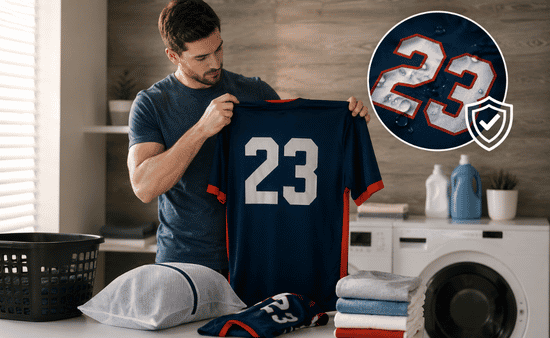
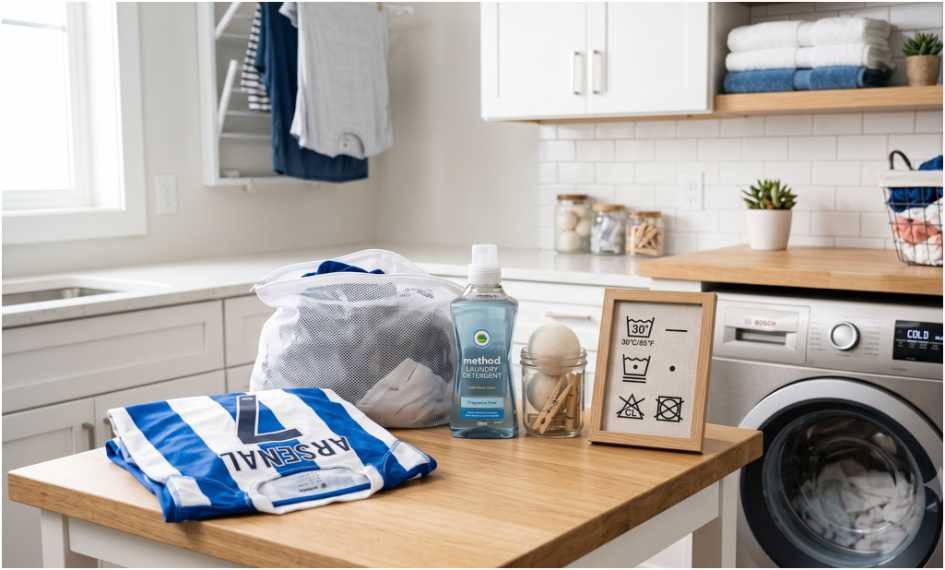
Turn the jersey inside out before washing. This protects screen-printed letters, patches, crests, embroidered logos, sponsor decals (DEC Automated Licensing System), and heat-pressed numbers from direct friction. If your jersey has raised lettering, vinyl prints, delicate patches, or collector value, place it inside a mesh laundry bag for extra abrasion protection.
Color sorting also matters. Wash white jerseys with whites and dark jerseys with dark clothing. Bright team colors can bleed if you mix them carelessly, especially during the first few washes. I also avoid washing jerseys with towels, jeans, hoodies, Velcro, or anything with zippers because rough fabrics and hardware can snag the material.
Is Hand Washing or Machine Washing Better for Jerseys?
Hand washing is the safest option for delicate, vintage, signed, or expensive jerseys. Fill a clean sink with room-temperature water and mild detergent. Submerge the jersey and gently move it through the water. Rub the fabric lightly against itself where sweat and body oils collect, especially under the arms, around the collar, and near the lower front.
Do not twist, scrub hard, or wring the jersey. That can stretch the fabric and damage printed details. Once the jersey looks clean, rinse it with cool water until the detergent is gone.
Machine washing works for many modern sports jerseys if the care label allows it. Use the delicate or gentle cycle, set the water temperature to cold or 30°C maximum, and choose a low-spin setting when possible. Cold water helps protect team colors, fabric shape, printed numbers, stitched letters, and sponsor graphics.
Use mild detergent, but do not overdo it. Too much detergent can leave residue in polyester and moisture-wicking fabric, which can make the jersey smell musty even after washing. Skip fabric softeners completely. Fabric softener can clog moisture-wicking pores, reduce breathability, and trap odor inside the fabric.
How Do You Wash Printed, Stitched, and Sublimated Jerseys?
Printed jerseys need the most careful handling. Screen-printed numbers, vinyl names, heat-pressed graphics, and sponsor decals can peel or crack when exposed to heat, friction, or harsh detergent. Wash these jerseys inside out, use cold water, avoid high spin, and never tumble dry them.
Stitched jerseys are usually more durable, but they still need gentle care. Embroidered patches, sewn names, and stitched numbers can loosen if they rub against rough clothing. I still use cold water and a mesh bag for stitched jerseys, especially if they are authentic NFL, MLB, NHL (National Hockey League), or college jerseys.
Sublimated jerseys, which have the design dyed into the fabric, often hold up well because the graphics are not sitting on top of the material. Even then, cold washing and air drying help preserve the fit, color, and fabric performance.
How Do You Dry a Sports Jersey Without Damage?
The safest drying method is air drying. Tumble dryers are risky because heat can melt sponsor decals, crack plastic numbers, shrink fabric, and damage heat-pressed badges. Even low dryer heat can hurt the design over time.
After washing, remove the jersey from the machine right away. Do not leave it sitting wet in the drum because damp fabric can develop odor. Gently press out extra water with a clean towel. Then hang the jersey on a plastic hanger or lay it flat on a clean towel in a shaded, well-ventilated area.
Avoid direct sunlight because strong sun can fade team colors. Avoid ironing too. A hot iron can ruin vinyl prints, heat-pressed numbers, badges, and crests. If wrinkles bother you, gently shake the jersey after washing and let it dry naturally.
How Should You Store a Jersey After Washing?
Good storage is part of sports jersey care instructions because damage can happen after laundry too. Make sure the jersey is completely dry before putting it away. Even slight dampness can cause mildew, odor, or fabric stiffness.
For everyday fan jerseys, I prefer hanging them in the closet instead of folding them tightly. Hanging helps prevent deep creases across numbers, names, patches, and logos. Use a smooth plastic hanger rather than a wire hanger that can stretch the shoulders.
For signed, vintage, or collectible jerseys, avoid regular washing unless you are sure it is safe. Store them away from sunlight, heat, and moisture. If the jersey has an autograph, frame it properly or store it flat with protective tissue paper so the signature and fabric stay in good condition.
How Do You Care for Different Sports Jerseys?
Football jerseys often have large numbers and thicker fabric, so they need space in the washer. Basketball jerseys usually use lightweight mesh, which dries fast but can stretch if handled roughly. Baseball jerseys may have buttons, piping, patches, and stitched details, so button them before washing and turn them inside out.
Hockey jerseys can hold odor because they are heavier, so air them out before washing. Soccer jerseys often have lightweight performance fabric and sponsor prints, so heat and friction are the biggest enemies.
Whether you wear jerseys to a Sunday watch party, March Madness event, MLB game, college football tailgate, youth sports tournament, or casual weekend outing, the same rule applies: clean the jersey gently and protect the design first.
FAQs About Washing Sports Jerseys
1. Can you wash a sports jersey in the washing machine?
Yes, you can wash most sports jerseys in the washing machine if the care tag allows it. Turn the jersey inside out, use cold water, choose a gentle cycle, and avoid rough clothing in the same load.
2. Should you wash a jersey inside out?
Yes, washing inside out helps protect names, numbers, crests, patches, decals, and embroidered details from friction during the wash cycle.
3. Can you put a jersey in the dryer?
No, you should avoid the dryer. Tumble dryer heat can shrink fabric, melt sponsor decals, crack numbers, and damage heat-pressed graphics.
4. How do you remove sweat smell from a jersey?
Air the jersey out first, then soak it in cold water with diluted vinegar or baking soda for about 10 minutes. Wash it with mild detergent and skip fabric softener.
Final Thoughts
The best way to keep your favorite jersey looking fresh is to treat it like fan gear worth protecting, not like regular laundry. Follow the care label, pre-treat stains fast, sort colors, use a mesh bag when needed, wash cold, skip bleach and softeners, and air dry every time.
These sports jersey care instructions work for fan jerseys, youth uniforms, custom jerseys, and game-day favorites across major US sports.
They also matter when choosing the right baseball jersey fit for big arms, because proper washing and drying help maintain sleeve comfort, shoulder shape, and overall fit. With the right routine, your jersey can stay clean, bright, odor-free, and ready for every kickoff, tipoff, puck drop, pitch, or first pitch.