



A sports jersey isn’t just another piece of clothing. It represents favorite teams, unforgettable games, personal achievements, or even a collection built over the years.
Yet many jerseys begin losing their color, shape, and quality long before they should, not because they’re worn too often, but because they’re cared for the wrong way.
The good news is that keeping a jersey looking game-day ready doesn’t require expensive products or complicated routines. A few smart habits during washing, drying, and storage can protect moisture-wicking materials, stitched lettering, and heat-pressed graphics for seasons to come.
These jersey maintenance tips focus on preserving both the appearance and performance of your favorite sportswear.
Your Washing Machine Is Usually Where Jersey Damage Begins

Most jersey damage happens during laundry day.
Unlike regular cotton T-shirts, sports jerseys are made with lightweight performance fabrics designed to manage moisture, improve airflow, and withstand movement. Those same materials can be damaged by excessive heat, rough fabrics, and harsh detergents.
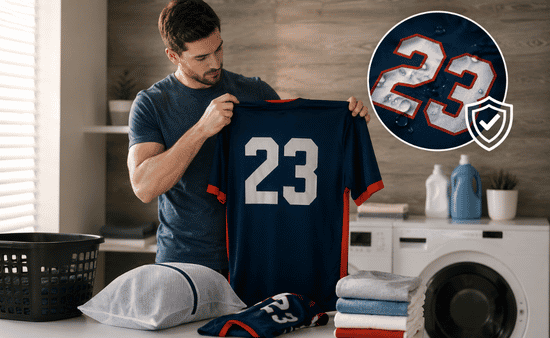
Before placing your jersey in the washer, always turn it inside out. This simple step reduces friction against printed logos, player names, and numbers. If your jersey has buttons, zippers, or hockey laces, secure or remove them beforehand to prevent snagging on mesh panels.
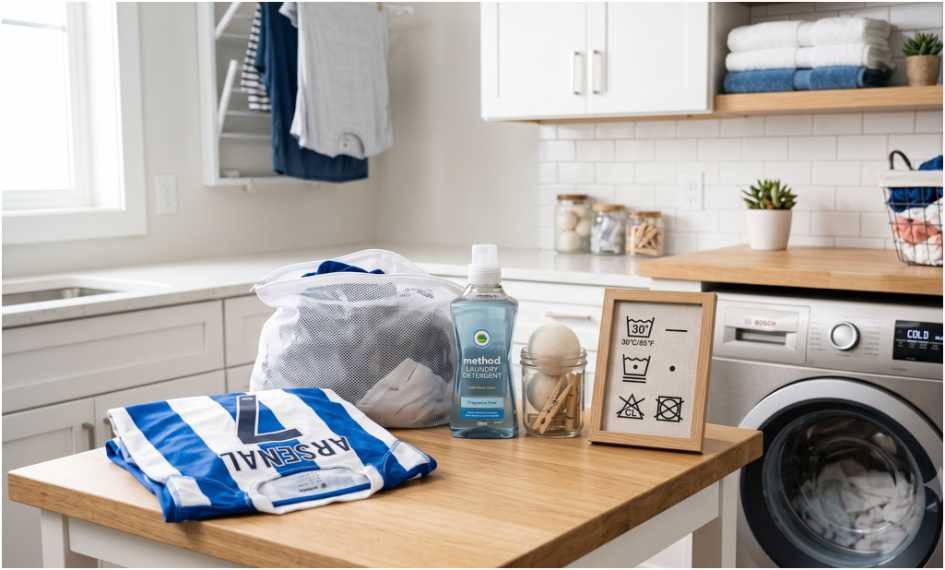
Another habit worth adopting is placing the jersey inside a mesh laundry bag. It creates an extra layer of protection and minimizes stretching caused by movement inside the washing machine.
Cold water and a delicate wash cycle remain the safest combination for preserving colors and fabric construction.
The Detergent You Choose Matters More Than You Think
Many people assume any laundry detergent will work. That’s rarely true for athletic apparel.
Harsh powdered detergents, chlorine bleach, and fabric softeners gradually weaken synthetic fibers and reduce the effectiveness of moisture-wicking materials. Fabric softener, in particular, leaves behind residue that traps odors and limits the fabric’s ability to move sweat away from your body.
Instead, choose a mild liquid detergent or one designed specifically for sportswear. These products clean effectively without stripping color or damaging delicate fibers.
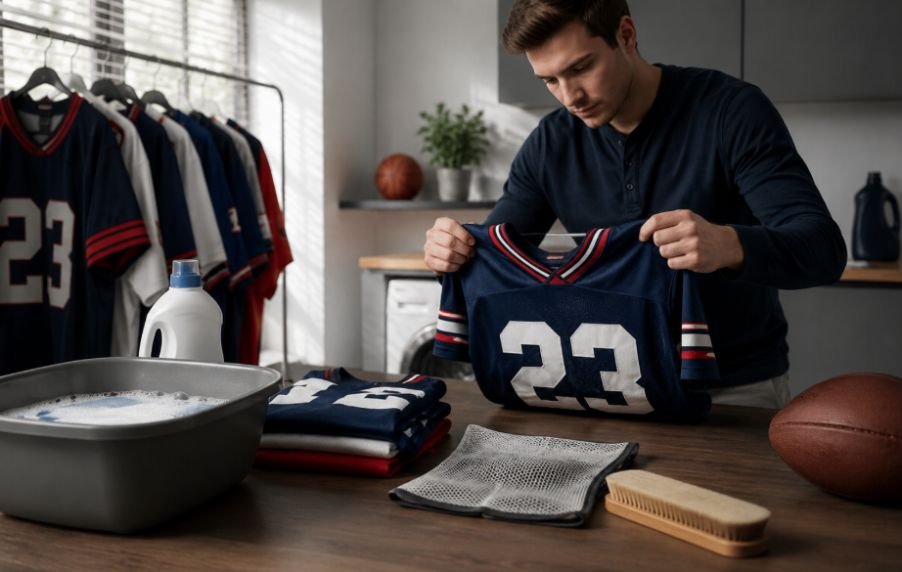
If your jersey develops stains after a game or practice, resist the urge to scrub aggressively. Dabbing the area with a mixture of distilled white vinegar and water or using a sports-specific stain remover is usually enough to loosen the stain while protecting the fabric.
The sooner stains are treated, the easier they are to remove without affecting the jersey’s finish.
Heat Is the Biggest Enemy of Sports Jerseys

Many fans unknowingly shorten the life of their jerseys by using heat throughout the cleaning process.
High dryer temperatures can shrink synthetic fabrics, weaken elastic fibers, and cause heat-pressed graphics to crack or peel. Direct sunlight creates similar problems by fading vibrant colors and damaging vinyl lettering over time.
Once washing is complete, gently reshape the jersey while it’s still damp and allow it to air dry indoors or in a shaded, well-ventilated space.
If wrinkles appear, avoid placing a hot iron directly on logos or numbers. Hanging the jersey in a steamy bathroom often removes light wrinkles naturally. When ironing is absolutely necessary, use the lowest heat setting and place a clean cloth between the iron and the fabric.
These small adjustments help preserve both the jersey’s appearance and structural integrity.
Small Care Habits That Make a Big Difference
Long-term jersey care isn’t about one perfect wash. It’s about consistently avoiding small mistakes that gradually wear the garment down.
Since jerseys are often part of everyday sports accessories for fans, caring for them properly helps protect both their style and sentimental value.
Some of the easiest habits include:
- Wash jerseys only with lightweight clothing, never heavy towels or denim.
- Never twist or wring out a wet jersey. Press excess water out gently instead.
- Use slim padded hangers or fold jerseys carefully to prevent stretched shoulder seams.
- Store jerseys in cool, dry spaces away from humidity and direct sunlight.
These habits take very little effort but significantly reduce fading, stretching, and unnecessary wear.
Not Every Jersey Needs the Same Level of Care

Authentic jerseys, replica jerseys, and fan editions often use different construction methods.
Authentic jerseys typically feature premium stitching, lightweight performance fabrics, and higher-quality finishes that benefit from extra care. Replica jerseys may rely more heavily on heat-pressed graphics, making them especially sensitive to high temperatures during drying or ironing.
If you’re unsure how your jersey was made, always check the manufacturer’s care label before washing. Those recommendations are based on the specific fabric blend and construction used for that garment.
Understanding these differences helps you avoid applying the same cleaning routine to every jersey in your collection.
Overwashing Can Wear Out Your Favorite Jersey
Many people believe washing a jersey after every wear is the safest option. In reality, unnecessary washing can shorten its lifespan.
If the jersey was worn casually for a few hours and isn’t heavily soiled, hanging it in a well-ventilated area may be enough to freshen it up before storing it. Jerseys worn during games or workouts should still be cleaned promptly to prevent sweat and body oils from settling into the fibers.
Learning how to wash sports jerseys correctly is often more important than simply washing them more often. Proper care protects colors, maintains elasticity, and helps performance fabrics continue doing what they were designed to do.
A thoughtful cleaning routine almost always delivers better long-term results than frequent washing.
FAQs:
1. Can I machine wash sports jerseys?
Yes. Use a delicate cycle with cold water, turn the jersey inside out, and place it in a mesh laundry bag for added protection.
2. Should I use fabric softener on jerseys?
No. Fabric softener can reduce moisture-wicking performance and leave residue that traps odors inside the fabric.
3. What’s the safest way to dry a jersey?
Air drying indoors or in the shade is the safest option. High heat from dryers and direct sunlight can damage fibers and graphics.
4. How should I store jerseys long-term?
Keep jerseys in a cool, dry place using padded hangers or careful folding to prevent stretching, fading, and moisture damage.
Great Jerseys Stay Great Because Someone Took Care of Them
Every jersey tells a story, whether it’s from a championship season, a favorite player, or years of cheering from the stands. Protecting that story doesn’t require expensive products or professional cleaning.
It comes down to consistent habits like washing with care, avoiding unnecessary heat, storing jerseys properly, and treating stains before they become permanent.
Those small decisions preserve colors, graphics, and fabric performance far longer than most people expect.
The jerseys that still look great years later usually have one thing in common: they’ve been cared for just as much as they’ve been worn.