



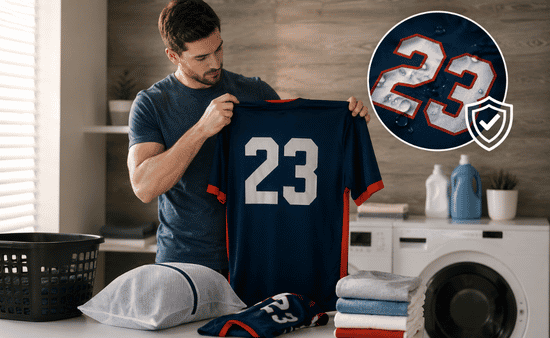
A quality sports jersey is more than just another piece of clothing. Whether it’s your favorite team’s game-day jersey or one you wear during weekend matches, it often carries memories that make replacing it harder than buying a new shirt. Unfortunately, the fabric usually isn’t the first thing to wear out. The names, numbers, sponsor logos, and team graphics tend to show damage much sooner.
If you’ve ever pulled a jersey out of the wash only to notice cracked lettering or peeling numbers, you’re not alone. Most print damage doesn’t happen because the jersey is old. It happens because of a few laundry habits that seem harmless but slowly weaken the heat-pressed graphics over time. Learning how to protect jersey prints after washing is less about buying special products and more about changing a few everyday habits.
Jersey Prints Are More Delicate Than the Fabric
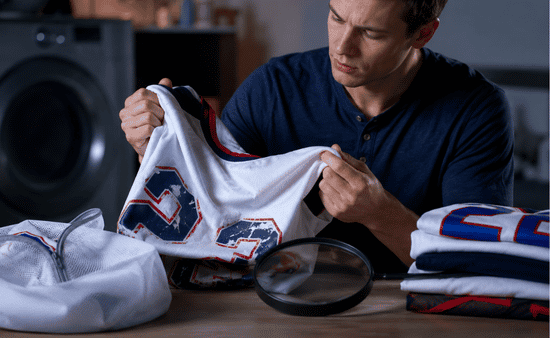
Modern sports jerseys are designed with lightweight, moisture-wicking materials that can handle repeated use. The printed elements, however, are much more vulnerable.
Most names, numbers, and sponsor logos are attached using heat-transfer vinyl or similar adhesives. While these materials are built to flex with the fabric, they don’t respond well to excessive heat, harsh detergents, or repeated friction. Every wash cycle places stress on those printed areas, especially if the jersey is mixed with heavier clothing like jeans, jackets, or towels.
Understanding this difference changes the way you care for your jersey. Instead of treating it like any other T-shirt, think of the printed graphics as the part that needs the most protection.
Build Better Washing Habits Before Damage Starts
Keeping jersey prints intact begins before the washing machine starts.
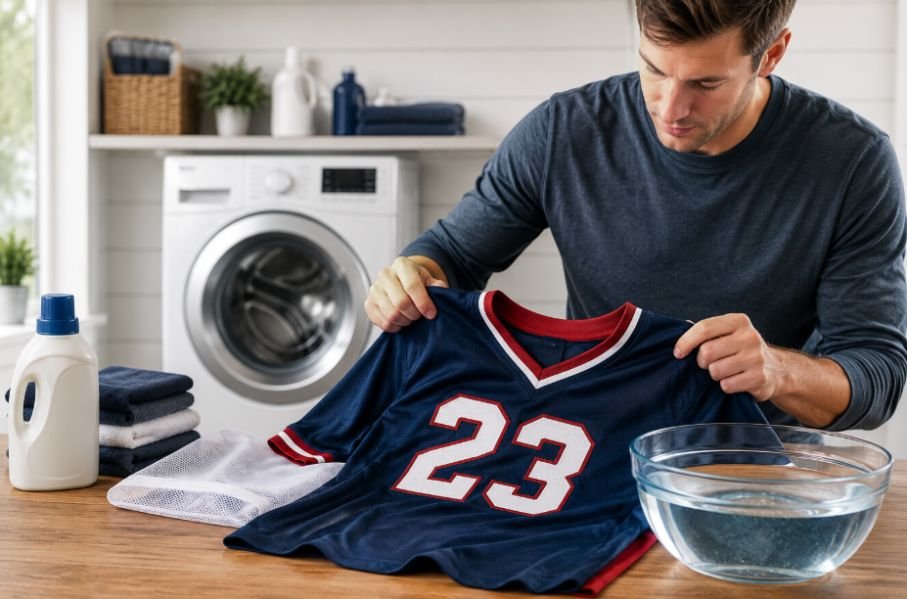
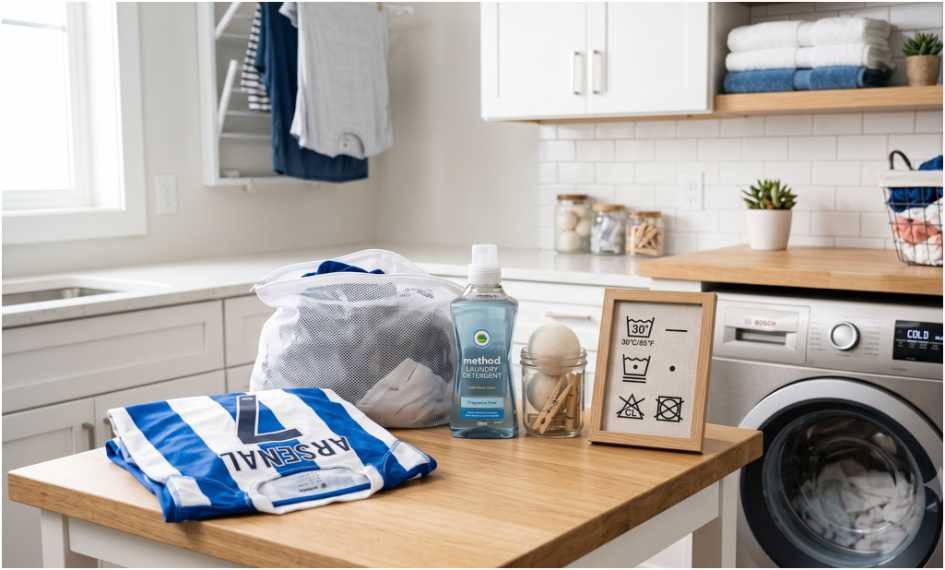
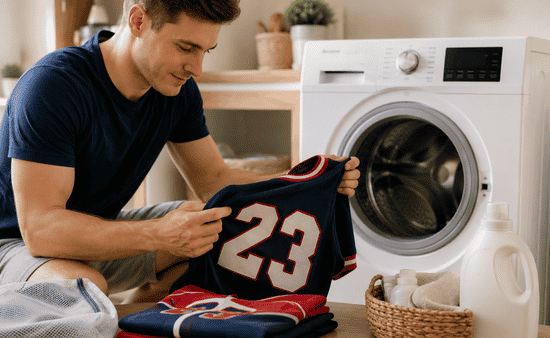
Turn the jersey inside out every time you wash it. This simple step reduces direct friction between the printed graphics and the drum of the washing machine. It also protects logos and lettering from rubbing against zippers, buttons, or rough fabrics in the same load.
Cold water should always be your first choice. High temperatures gradually soften the adhesive holding printed graphics in place, increasing the risk of peeling or cracking. A delicate or gentle wash cycle creates less movement inside the machine, reducing unnecessary stress on the jersey.
Detergent selection matters as well. Choose a mild liquid detergent designed for performance fabrics whenever possible. Avoid bleach and fabric softeners, both of which can weaken synthetic fibers and shorten the lifespan of printed graphics.
Another mistake many people overlook is overloading the washing machine. When jerseys become trapped between heavier garments, constant rubbing can damage both the print and the fabric. Washing jerseys with lightweight athletic clothing is a much safer approach.
Drying Is Where Most Jersey Prints Are Lost
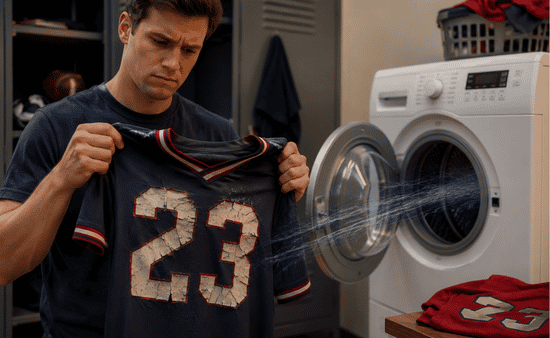
Many people assume the washing machine causes the most damage. In reality, the dryer is often responsible for ruining jersey prints.
High heat softens the adhesive used on heat-pressed graphics. As the drum rotates, friction and temperature work together to weaken names, numbers, and logos until they eventually crack, curl, or peel away from the fabric.
Instead of using a dryer, gently press excess water from the jersey with a clean towel. Avoid twisting or wringing the material, as this can stretch both the fabric and the printed graphics.
Air drying remains the safest option. Hang the jersey on a padded or wide-shoulder hanger to help it maintain its shape while drying naturally. If possible, place it in a shaded, well-ventilated area rather than direct sunlight. Prolonged sun exposure can gradually fade team colors and printed graphics, even if the jersey isn’t exposed to high temperatures.
While the fabric is still slightly damp, smooth out any wrinkles by hand. Flattening curled edges early can help the graphics dry evenly without creating permanent creases.
Don’t Ignore Care After Laundry Day
Protecting jersey prints doesn’t stop once the jersey is dry.
Storage plays a bigger role than many people realize. Before putting the jersey away, make sure it is completely dry. Even slight moisture trapped inside folded fabric can create mildew, unpleasant odors, and gradual damage to printed graphics.
Avoid storing jerseys inside sealed plastic bags for long periods. Plastic traps moisture and limits airflow, which can affect both the fabric and the adhesive beneath printed areas. A breathable garment bag or a well-ventilated closet provides much better long-term protection.
Occasionally, you may notice minor wrinkles forming over numbers or logos. If ironing becomes necessary, never place the iron directly onto the print. Always use a clean cotton cloth or parchment paper as a protective layer and select the lowest heat setting with no steam. Gentle pressure for a few seconds is usually enough. Excessive heat can permanently melt vinyl graphics within moments.
Many collectors also recommend rotating jerseys if you wear them frequently. Giving each jersey time to rest between washes naturally reduces wear on the printed details.
One habit that’s equally important is learning the common mistakes that ruin sports jerseys. Small actions like tossing a jersey into a hot dryer, washing it with heavy denim, or using harsh stain removers often cause more long-term damage than regular use itself.
A Little Extra Care Goes a Long Way
It’s tempting to wash a jersey after every wear, but that isn’t always necessary. Unless it’s heavily soiled or worn during intense physical activity, spot cleaning small stains can help reduce the number of full wash cycles. Fewer washes mean less friction, less exposure to detergents, and a longer life for both the fabric and the printed graphics.
It’s also worth checking your jersey occasionally for early signs of wear. Small cracks, lifting corners, or fading around letters and numbers are easier to manage when noticed early. Ignoring them often leads to larger sections peeling away over time.
Think of jersey care as preventive maintenance rather than repair. Once a print begins separating from the fabric, restoring it perfectly becomes much more difficult than preventing the damage in the first place.
FAQs: Want Your Jersey to Last Longer? Here’s How to Protect Jersey Prints After Washing
Can I put my sports jersey in the dryer?
No. High heat can weaken the adhesive used for names, numbers, and logos, leading to peeling, cracking, or fading over time.
Should I wash jerseys after every use?
Not always. If the jersey isn’t heavily soiled, spot cleaning and airing it out can reduce unnecessary washing and extend its lifespan.
Is it safe to iron a jersey if the print looks wrinkled?
Yes, but only with caution. Use a pressing cloth or parchment paper, choose the lowest heat setting, and never apply the iron directly to the print.
What’s the best way to store sports jerseys?
Store jerseys completely dry on a wide hanger or in a breathable garment bag. Avoid sealed plastic bags that trap moisture and can damage printed graphics.
The Jerseys That Last the Longest Usually Receive the Simplest Care
Most damaged jerseys aren’t ruined by years of cheering from the stands or countless hours on the field. They’re damaged in the laundry room. Heat, friction, and rushed care routines slowly break down the details that make a jersey special.
Fortunately, protecting those prints doesn’t require expensive products or complicated routines. Washing with cold water, skipping the dryer, handling prints gently, and storing jerseys properly can preserve their appearance season after season.
A few extra minutes on laundry day can help your favorite jersey look like game day for years to come.