



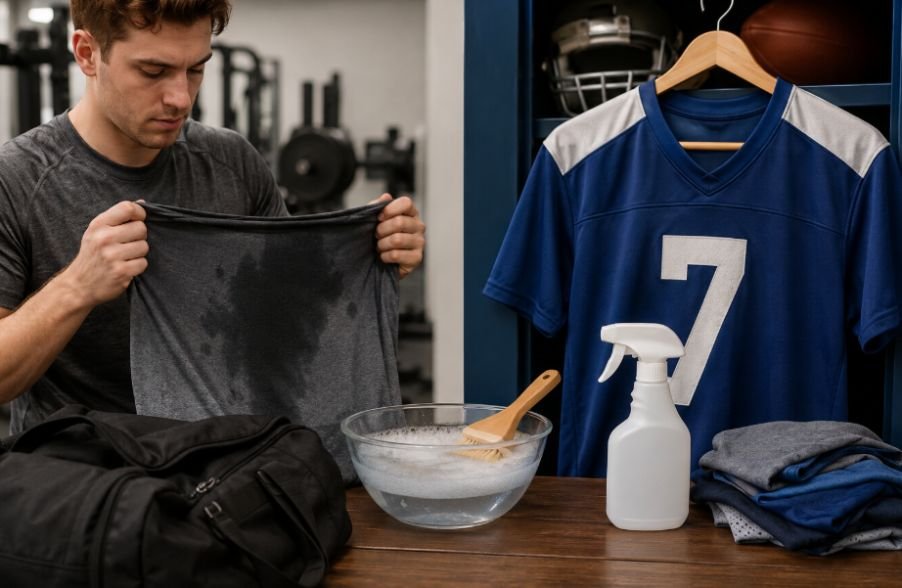
You pull your favorite workout shirt or team jersey out of the washer expecting it to look fresh, only to notice faint yellow marks under the arms or a lingering odor that never seems to disappear. It’s frustrating, especially when you’ve already washed the garment more than once.
Many people assume they’re dealing with stubborn sweat, but that’s only part of the story.
The truth is that effective sweat stain removal isn’t about using stronger chemicals. It’s about understanding what causes the stains and treating them before they become permanent.
Whether you’re cleaning everyday gym clothes or a prized sports jersey, the right approach can remove stains, preserve fabric quality, and keep performance wear looking its best for much longer.
Sweat Stains Are More Than Just Sweat
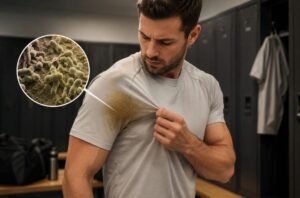
Despite the name, sweat usually isn’t the main culprit behind those yellow patches. As perspiration mixes with body oils, dead skin cells, minerals, and aluminum compounds found in many antiperspirants, it creates stains that cling to fabric fibers.
Over time, these stains become more noticeable, especially on light-colored clothing.
Performance fabrics make the situation even more challenging. Materials such as polyester and other moisture-wicking fabrics are designed to pull sweat away from your skin, but they can also trap bacteria and odor if they aren’t washed properly.
That’s why athletic apparel often smells clean right after washing, but develops an odor again once you start sweating.
Understanding what’s causing the stain is the first step toward choosing a cleaning method that actually works.
Start With a Pre-Soak Instead of Scrubbing
Many people attack sweat stains with a brush immediately, but scrubbing first can wear down fabric fibers without removing the buildup underneath. A simple pre-soak loosens the residue before deeper cleaning begins.
Why Vinegar Helps Break Down Buildup
Mix one cup of distilled white vinegar with two cups of warm water and soak the affected garment for 30 to 60 minutes. The vinegar helps loosen mineral deposits, body oils, and odor-causing bacteria that have settled into the fabric.
If you’re washing a sports jersey, be gentle when handling stitched names, numbers, and embroidered patches. The vinegar solution is generally safe for most jerseys, but excessive rubbing around logos and lettering can reduce their lifespan.
Once the soak is complete, gently squeeze out excess water instead of wringing the garment.
Treat the Stain Before It Reaches the Washing Machine
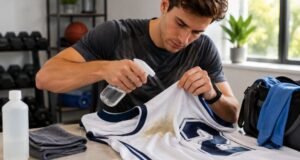
A washing machine alone rarely removes older sweat stains. Giving the stained area a targeted treatment first usually produces much better results.
A DIY Paste That Works on Most Sweat Stains
One of the most reliable home remedies combines equal parts baking soda and hydrogen peroxide with a few drops of liquid dish soap. Apply the paste directly to the stained area and use a soft-bristled toothbrush to gently work it into the fabric.
Allow the mixture to sit for 30 to 60 minutes before washing. This gives the ingredients enough time to lift discoloration without damaging the garment.
If you’re cleaning colored clothing or vintage jerseys, test the mixture on a hidden area first since hydrogen peroxide may affect some dyes. Gentle pressure is enough. Aggressive scrubbing often causes more damage than the stain itself.
Your Washing Routine Can Make or Break the Results
Removing the stain is only half the process. The way you wash athletic clothing determines whether the stain stays gone or quickly returns.
Choose Enzyme Detergent Instead of Bleach
Standard detergents aren’t always designed to remove the protein-based residue left behind by sweat and body oils. Enzyme detergents are specifically formulated to break down these organic compounds, making them a better choice for athletic apparel and sports jerseys.
Products designed for performance wear can clean moisture-wicking fabrics more effectively while helping eliminate odors trapped inside the fibers.
Bleach, on the other hand, often does more harm than good. Besides weakening certain fabrics, it can react with sweat residue and actually make yellow stains appear worse over time.
Cold Water Is Non-Negotiable
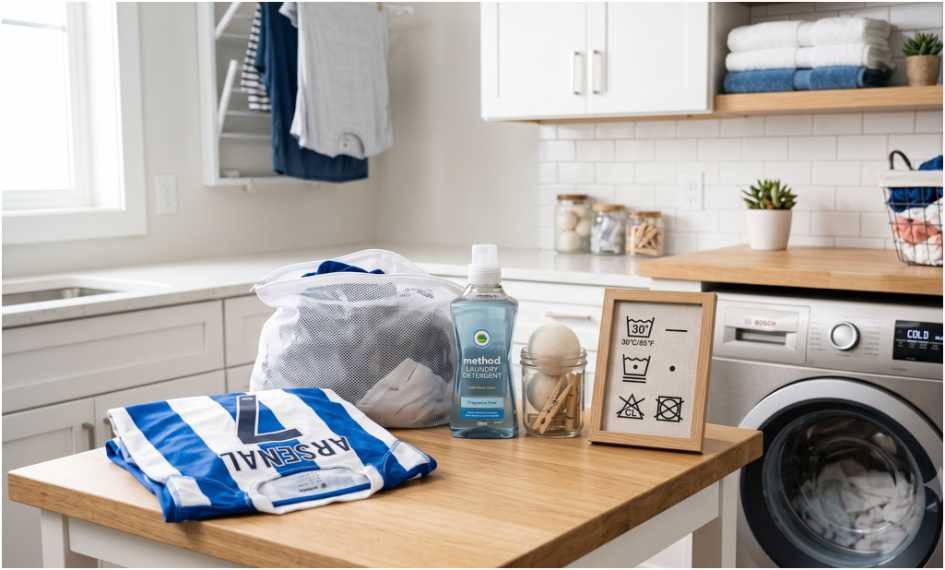
Hot water may seem like the obvious choice for dirty clothing, but it can permanently set sweat stains into fabric. Cold water helps lift stains while protecting moisture-wicking materials, printed graphics, and stitched details.
Choose a gentle wash cycle whenever possible, especially for sports jerseys that include embroidered logos or heat-pressed lettering.
Drying Mistakes That Keep Sweat Odors Coming Back
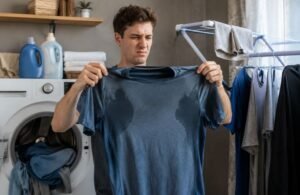
The dryer is where many stain removal efforts fall apart.
Even if a stain appears lighter after washing, placing the garment into a hot dryer can permanently lock in any remaining discoloration or odor. Heat bonds leftover residue to the fabric, making future sweat stain removal much more difficult.
Instead, air-dry athletic clothing and jerseys whenever possible. This preserves elasticity, protects moisture-wicking technology, and prevents unnecessary wear.
It’s also worth turning jerseys inside out before washing. This simple habit helps protect names, numbers, and graphics from friction during the wash cycle.
If you’re looking for more jersey maintenance tips, combining inside-out washing with gentle detergent and air drying can significantly extend the life of your favorite sports apparel.
Avoid fabric softeners as well. Although they leave clothes feeling soft, they coat performance fabrics and reduce their ability to wick moisture away from your body. Over time, that coating can also trap odors, making athletic clothing smell unpleasant even after a fresh wash.
Keeping fabric clean and smooth also makes styling easier, especially when learning how to wear a football jersey without looking bulky.
Small Laundry Habits That Prevent Future Sweat Stains
Removing stains is helpful, but preventing them saves far more time.
Try washing workout clothes as soon as possible after exercising rather than leaving them bundled inside a gym bag. Warm, damp fabric creates an ideal environment for bacteria to grow, which leads to stronger odors and more stubborn stains.
Avoid overloading the washing machine, since crowded loads prevent detergent from reaching every garment effectively. If clothing is heavily soaked with sweat after a long workout or game, a quick rinse before laundering can remove excess salts and body oils before they settle into the fibers.
These simple habits require very little extra effort, yet they make a noticeable difference in keeping activewear cleaner and fresher over time.
FAQs:
1. Can old sweat stains still be removed?
Yes. Older stains often respond well to pretreatment with a baking soda and hydrogen peroxide paste before washing with an enzyme detergent.
2. Is bleach recommended for sweat stain removal?
Usually not. Bleach can weaken fabric fibers and may react with sweat residue, making yellow stains more noticeable.
3. Why do my gym clothes still smell after washing?
Odor-causing bacteria and body oils can remain trapped inside moisture-wicking fabrics. An enzyme detergent and proper air drying usually provide better results.
4. Should I machine-dry sports jerseys?
It’s best to air-dry them. High heat can set remaining stains, reduce fabric performance, and damage printed or stitched graphics.
Better Laundry Habits Beat Stronger Stain Removers Every Time
Most people assume stubborn stains require stronger cleaning products, but that’s rarely the case. Long-lasting results usually come from treating stains early, choosing the right detergent, washing with cold water, and avoiding excessive heat.
Together, these habits protect athletic apparel while keeping jerseys looking newer for seasons to come.The best sweat stain removal routine isn’t complicated. It’s simply consistent.