



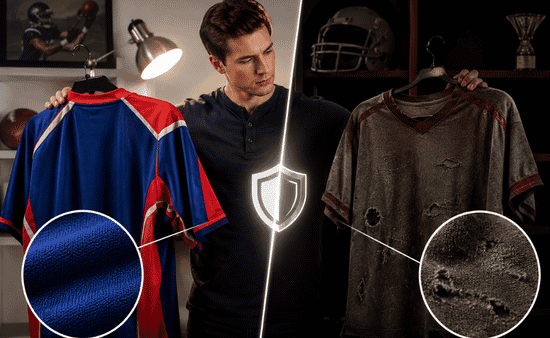
You’ve probably seen it happen. Two fans buy the same jersey on the same day, wear it just as often, and cheer through the same season. A few years later, one still looks crisp and game-ready, while the other has faded colors, peeling numbers, and stretched fabric. The difference usually isn’t the quality of the jersey. It’s how it has been cared for.
Modern sports jerseys are built with advanced performance fabrics designed to handle sweat, movement, and repeated wear. But those same materials also require a little more attention than everyday clothing. Understanding how to protect jersey fabric isn’t complicated, but a few small habits can determine whether your favorite jersey lasts one season or many.
It’s Not Just the Fabric That Determines a Jersey’s Lifespan
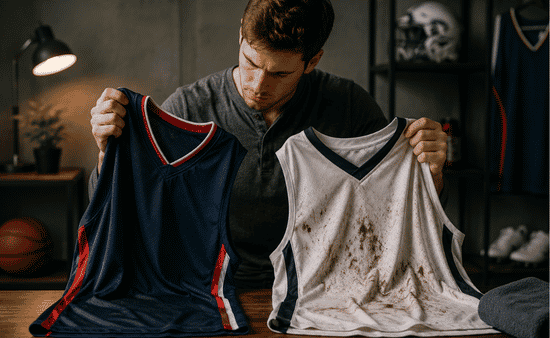
Many people assume an expensive jersey will naturally outlast a cheaper one. While better construction certainly helps, longevity depends just as much on the material and the care routine that follows.
Most authentic and replica jerseys are made from polyester or polyester blends. These synthetic fibers are popular because they resist shrinking, hold their shape well, and feature moisture-wicking materials that move sweat away from the body. That makes them ideal for both athletes and fans wearing jerseys on game day.
Cotton jerseys feel softer, but they generally stretch more easily, absorb moisture, and show signs of wear sooner. Blended fabrics offer a balance of comfort and durability, though they still benefit from proper washing and storage.
The way graphics are applied also plays a major role. Sublimated designs become part of the fabric itself, making them highly resistant to cracking or peeling. Heat-pressed logos and player names, on the other hand, sit on top of the fabric and are much more vulnerable to heat and friction. Stitched tackle twill lettering is incredibly durable but can fray if it repeatedly rubs against rough fabrics during washing.
Everyday Habits Often Cause the Most Damage
Jersey fabric rarely wears out overnight. Instead, small mistakes repeated over time slowly break it down.
One of the biggest culprits is heat. Washing jerseys in hot water weakens polyester fibers, fades colors, and can loosen adhesives used in printed graphics. Machine dryers are even harsher. High temperatures may cause numbers, sponsor logos, and names to crack, wrinkle, or separate from the fabric.
Another common mistake is washing jerseys alongside heavy clothing like jeans, hoodies, or towels. The constant friction inside the washing machine creates unnecessary stress on delicate mesh fabric and decorative elements.
Even fabric softener, a product designed to make clothes feel softer, can work against performance apparel. It leaves behind a coating that clogs the tiny fibers responsible for moisture management, reducing the effectiveness of moisture-wicking technology over time.
These issues develop gradually, which is why many people don’t notice the damage until it becomes permanent.
Small Changes That Make Jerseys Last Much Longer
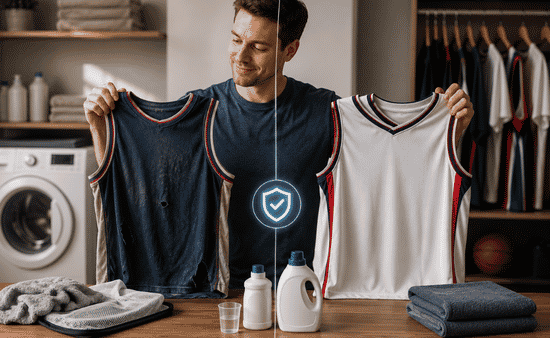
Fortunately, protecting a jersey doesn’t require expensive products or professional cleaning. Consistency matters far more than complicated routines.
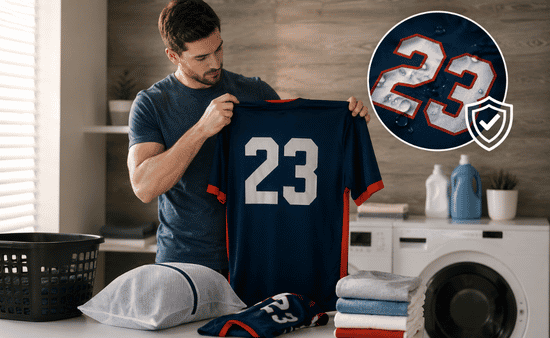
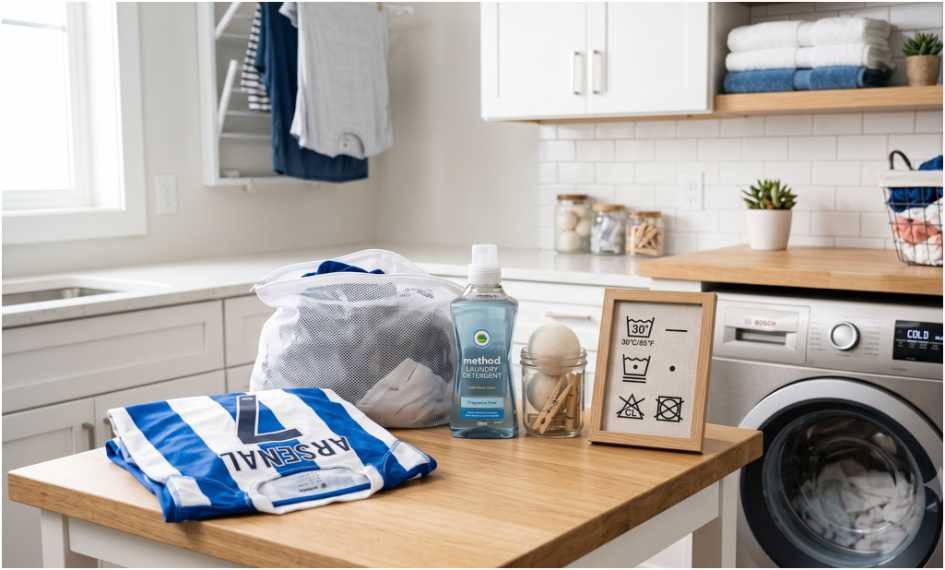
Before washing, always turn the jersey inside out. This simple step protects names, numbers, patches, and logos from rubbing directly against the drum of the washing machine. Placing the jersey inside a mesh laundry bag provides another layer of protection, especially for stitched or collectible pieces.
Choose cold water and a gentle wash cycle whenever possible. A mild, bleach-free detergent removes dirt without being overly harsh on technical fabrics.
If the jersey develops odors after practices or long game days, avoid masking them with fabric softener. Instead, focus on proper washing and timely sweat stain removal before stains become deeply embedded in the fibers. Treating stains early is much gentler than scrubbing them aggressively after they’ve dried.
When the wash is finished, resist the temptation to use the dryer. Air drying preserves both the fabric and the graphics while helping the jersey maintain its original shape.
Storage Matters More Than Most Fans Realize
Many jerseys spend far more time in storage than they do being worn.
That makes storage just as important as washing.
Heavy jerseys with stitched crests or embroidered patches can slowly stretch if they remain on thin wire hangers for months. A padded hanger offers better support, while folding collectible jerseys neatly can help preserve their shape over the long term.
Sunlight is another overlooked threat. Extended exposure to ultraviolet rays gradually fades vibrant team colors and weakens fabric dyes. Keeping jerseys in a cool, dry space away from direct sunlight helps maintain their appearance season after season.
It’s also worth avoiding cramped closets where jerseys are tightly compressed between heavier garments. Giving performance apparel enough space allows the fabric to breathe and reduces unnecessary wrinkles.
Authentic Jerseys Deserve a Different Care Routine
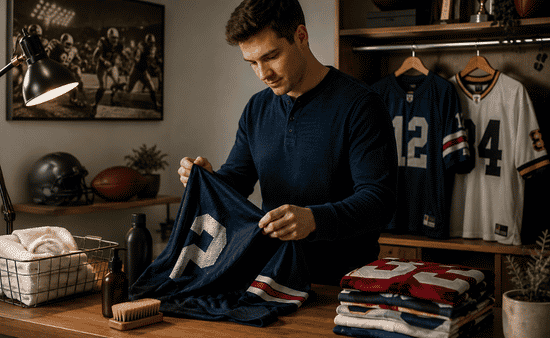
Not every jersey serves the same purpose.
A jersey worn every weekend naturally requires different care than a signed collectible or a limited-edition release. Game-day jerseys can handle regular washing when cared for properly, but memorabilia deserves a gentler approach.
Collectors often wash valuable jerseys only when absolutely necessary. Spot cleaning small marks and storing them in protective garment bags can preserve both their appearance and long-term value. If displayed, keeping them away from direct sunlight and excessive humidity prevents premature fading and fabric deterioration.
Understanding how a jersey will be used helps determine the best maintenance routine from the very beginning.
The Best Jersey Care Routine Is the One You Actually Follow
There’s no secret product that guarantees a jersey will last forever. Most long-lasting jerseys simply benefit from consistent care. Cold water, gentle detergents, careful drying, thoughtful storage, and prompt stain treatment all work together to preserve fabric integrity.
The small habits may seem insignificant after a single wash, but over dozens of washes and several seasons, they become the reason one jersey still looks almost new while another is ready to be replaced.
FAQs: Why Some Jerseys Last for Years While Others Don’t: How to Protect Jersey Fabric
Can I wash a sports jersey after every wear?
Yes, but use a gentle cycle with cold water. Overwashing isn’t usually the issue—harsh washing methods are.
Why shouldn’t I use fabric softener on jerseys?
Fabric softener leaves residue that can reduce the performance of moisture-wicking fabrics and affect long-term durability.
Is air drying really better than machine drying?
Yes. Air drying prevents excessive heat from damaging polyester fibers, printed graphics, and stitched lettering.
What’s the safest way to store a jersey?
Fold collectible jerseys or use padded hangers for frequently worn ones. Always keep them away from direct sunlight and damp storage areas.
The Jerseys That Last the Longest Usually Receive the Simplest Care
It’s easy to assume jersey care requires expensive specialty products or professional cleaning, but that’s rarely the case. The jerseys that continue looking sharp season after season usually belong to fans who stick to a few consistent habits.
They wash with cold water, skip unnecessary heat, treat stains early, and store their jerseys with the same care they give the memories attached to them. Those simple choices protect both the fabric and everything the jersey represents.
A great jersey isn’t just something you wear. With the right care, it’s something you’ll still be proud to wear years from now.